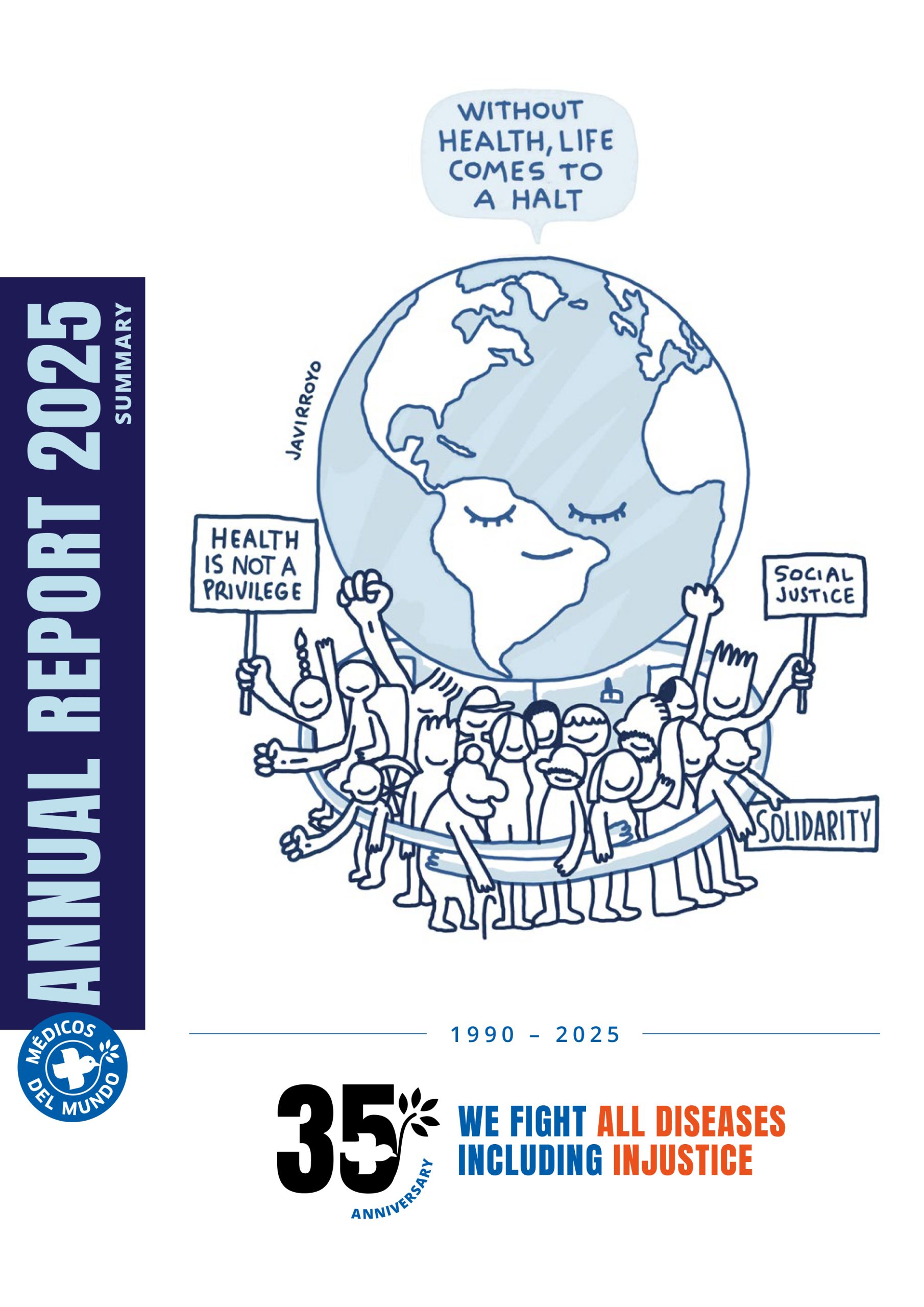
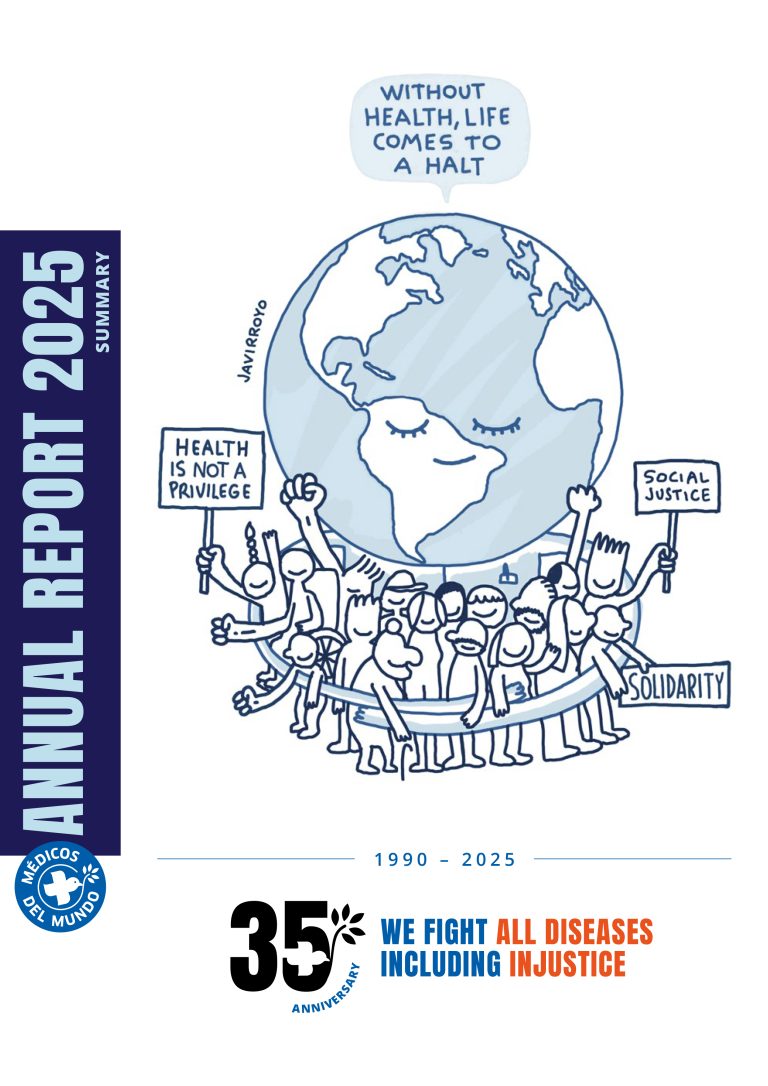
Annual Report Summary Médicos del Mundo 2025 Resumen Memoria de Médicos del Mundo 2025 en inglés
True to our principles, in 2025 we have maintained our role in speaking out and bearing witness, whilst at the same time continuing to take action to alleviate the situation of social groups and communities in particularly vulnerable circumstances across most of Spain’s autonomous communities. We are a healthcare organisation, but we are acutely aware that without dignity there can be no health.
The year 2025 has been a period of consolidation and growth for our national and regional programmes, strengthening our work across sixteen autonomous communities and Melilla. Our efforts have been focused on guaranteeing the right to health for those in the most vulnerable situations. Through a model based on community engagement, comprehensive care and a rights-based approach, we have maintained a sustained response to situations of social exclusion, gender-based violence and human mobility.
We have reached 29,296 people through fixed facilities, mobile units and a community-based network that has enabled us to adapt to the realities of each region.
With regard to international programmes, 2025 saw a continued worsening of humanitarian crises on a global scale, pushing aid requirements to unprecedented levels.
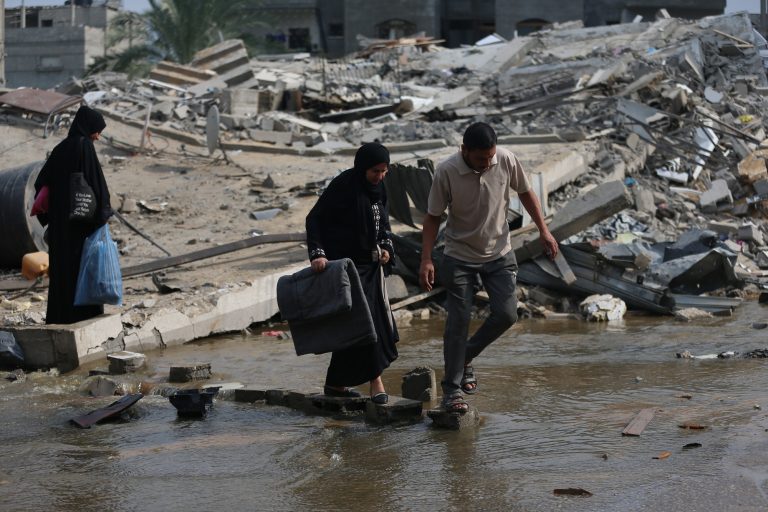
According to the Global Humanitarian Overview 2025, 185 million people required assistance across 72 countries. The erosion of respect for international humanitarian law, systematic restrictions on access in crisis-hit areas such as Gaza, Sudan and Ukraine, and the persistence of high-intensity urban conflicts exacerbated the vulnerability of the affected populations.
In 2025, armed conflicts continued to be a key factor in the worsening of humanitarian crises, with particularly critical situations in Gaza, Ukraine, Palestine, Syria and Burkina Faso, where protracted violence, displacement and the weakening of health systems increased the vulnerability of the populations.
FIGURES
Throughout the year, we had
1,009 members (354 men and 655 women)
1,650 volunteers (359 men, 1,287 women and 4 of other genders)
45 volunteers from the European Solidarity Corps initiative (11 men and 34 women) in Sahrawi refugee camps, Bolivia, El Salvador, Honduras, Guatemala, Mauritania, Senegal and Sierra Leone
69,024 regular donors (30,564 men, 37,780 women and 680 unspecified) and 861 collaborating private and public organisations
Staff
63 aid workers (32 men and 31 women)
342 at regional offices (29 men and 313 women)
183 at head office (60 men and 123 women)
644 in the countries where we carry out projects (321 men and 323 women)
Total: 1,231 people (442 men and 789 women)
Projects in Spain
180 regional projects
32 national projects
1 European project
35,013 barriers to accessing the national health service, affecting 12,934 people
13,021 (37.2%) administrative
12,773 (36.4%) informational
3,090 (8.8%) financial
3,171 (9%) cultural
2,991 (8.5%) physical
29,296 people assisted
7,629 (26 per cent) men, 26 (0.09 per cent) trans men
21,659 (73.9 per cent) women, 748 (2.6 per cent) trans women
8 (0.03 per cent) non-binary people
14,426 (49.2%) people engaged in sex work: 14,203 women (48.5%), 13,480 cis women (46.0%) and 723 trans women (2.5%), and 219 men (0.7%), 213 cis men (0.7 per cent) and 6 trans men (0.02 per cent)
27,193 (92.8 per cent) migrants: Colombia 8,076 (29.7 per cent), Morocco 3,182 (11.7 per cent), Venezuela 2,937 (10.8 per cent), Peru 1,740 (6.4 per cent), Romania 1,332 (4.9 per cent), Algeria 1,196 (4.4 per cent), Paraguay 870 (3.2 per cent), the Dominican Republic 734 (2.7 per cent) and Senegal 680 (2.5 per cent)
903 people affected by FGM (3.1 per cent): 734 women (2.5 per cent) and 169 men (0.6 per cent)
23,817 (81.3%) people in health rights programmes: 17,077 women (71.7%), 6,716 men (28.2%) and 7 non-binary people (0.03%)
International projects
- 101 projects: 52 in development cooperation, 43 in humanitarian action, 2 in emergencies, 2 EU Volunteers (development cooperation), 1 ECHO regional project in Central America (humanitarian action) and 1 USAID project in Central America (humanitarian action)
- 16 countries or territories: Afghanistan, Burkina Faso, Sahrawi refugee camps, Mauritania, Mozambique, Senegal, Sierra Leone, South Sudan, Bolivia, El Salvador, Guatemala, Honduras, Venezuela, the Occupied Palestinian Territory, Syria and Ukraine.
67 national partner organisations
2,548,116 direct beneficiaries
16,520,771 indirect beneficiaries